
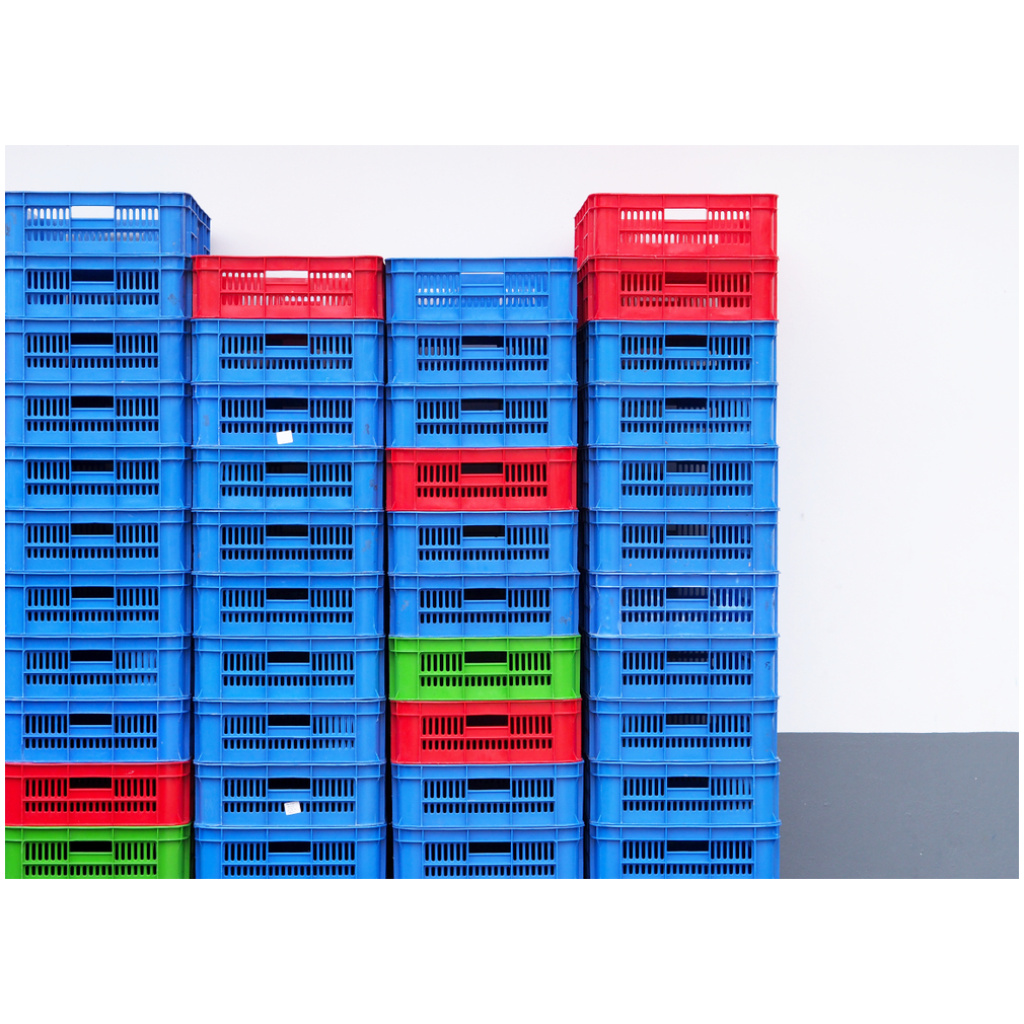
Stillage is one of those terms that will be very familiar to those in a particular field, but almost unknown to those outside it. In this case, it is a term from the world of factories, warehousing and logistics. However, once you’ve learnt the answer to the question ‘what is a stillage?’, you’ll probably realise that you’ve seen or been near them quite a lot – if you’ve been to a garden centre, a DIY store, a scrapyard or a furniture store then the chances are that you’ve encountered a stillage.
A stillage is a transport structure that is used like a classic pallet or skid. However, while a pallet only provides a floor for the load, a stillage has raised sides, so it forms a box or container. A common form of stillage is a steel base with a steel wire cage around the sides, but other forms, such as framework or solid sides, exist.
What is a stillage used for?
The big advantage of a stillage is that it supports and secures the load during transport and during storage. This is where their name comes from – they hold loads still.
This means that stillages can transport and secure multiple loose items as one item, without the need to lash down, wrap or secure them as on an ordinary pallet. Stillages can be used to group individual items into single loads by destination or by customer, or by type for easy picking and stocktaking.
What are stillages used for? Well, the classic box or cage-like stillage is well-suited for general bulk transport of loose items. Their most common use is for moving products, materials, items or waste around a factory, warehouse, farm or similar premises. Stillages like these are compatible with standard industrial and agricultural forklifts, making them easy to integrate into existing processes and infrastructure.
As well as easy transport, stillages provide secure and flexible storage for raw materials, stock or products. The caged or enclosed sides provide safe storage even when on racks at height. Most types of stillage have structural or reinforced corners so they can be stacked on top of one another for better use of space. This also means that stillages can protect the items inside far more effectively than an ordinary pallet, which cannot be stacked while loaded.
Stillages can also be more bespoke for specific roles or to carry and store specific types of cargo. A-frame stillages are used to transport sheets of glass or other fragile materials. Profile stillages are open-framed structures for handling extruded or awkward-shaped items such as metal or plastic parts and mouldings. Post pallets are also a form of stillage, although they are often classified separately. These are steel or plastic pallets with posts at each corner, which simultaneously keeps the base off the floor and provide headroom for stacking while loaded.
A stillage is also the name given to the framework or shelving used to support beer barrels, but this is nearly always a fixed structure for storage or display rather than being portable for transport.
The Arrival of Plastic Stillages
Just as plastic pallets transformed the logistics industry by offering key benefits over traditional versions, so do plastic stillages.
Plastic stillages retain the key benefits and uses of traditional steel stillages. They support or enclose the load, allowing safe and efficient transport of loose or bulky cargo and materials. They protect and segregate the load and can also be stacked or shelved for easy storage.
To this, plastic stillages such as those produced and sold by INKA Pallets add other qualities. They’re lighter than steel stillages while having the same durability and load capacity. They’re moulded from heavy-duty plastic, with ergonomic built-in handles and smooth surfaces, which make for easy handling and convenient storage and transport.
Plastic stillages are also easier to clean and more hygienic than wooden or steel varieties, with solid impermeable construction and no paint or coatings to chip or flake off. INKA can provide plastic stillages that meet food-grade container standards. Unlike steel stillages, plastic stillages are immune to rust or other forms of corrosion, which enhances their service life and also heightens safety, such as compliance with LOLER – which we will cover further on in this blog.
INKA’s range of plastic stillages covers a huge range of sizes, applications and features. From simple one-piece pallet boxes and perforated or vented boxes to insulated transport containers and fish trays. INKA can also provide plastic stillages with features such as side doors, which fold down for easy loading/unloading, or folding side sleeves, which can be slotted into the base when in use and then removed for space-efficient stacking or transport when empty. We also offer plastic stillages with various configurations and numbers of runners as well as some models with wheels.
Are stillages subject to LOLER?
For many businesses with logistics or manufacturing information, complying with LOLER is a vital requirement. These are the Lifting Operations and Lifting Equipment Regulations, which ensure that all lifting equipment and lifting operations are appropriate and safe in a commercial setting.
The question of ‘Are stillages subject to LOLER?’ is one that often comes up, and it is something of a grey area. Because stillages are usually made to be handled by a forklift, they are lifted and moved by being supported from below. This means that in most cases, stillages are part of the load being lifted, not the lifting equipment itself. They are therefore not specifically covered by LOLER.
If stillages are used to carry a load while being lifted, lowered or suspended from above (such as being slung from a crane or hoist) then they become a piece of lifting equipment rather than part of the load, and in these cases the stillage is covered by LOLER.
When a stillage is used in a way that makes it a piece of lifting equipment, it needs to be marked, inspected, used and logged in keeping with LOLER. This means that stillages used in this way can only be slung or suspended from lifting eyes or other attachments that are designed and certified by the manufacturer for that purpose.
Even if not used in a way that comes under LOLER, plastic stillages (and those made from other materials) are still covered by general health and safety regulations. They must be CE marked – all of INKA’s products are CE marked – and have the safe working load (SWL) clearly marked, and this should never be exceeded. They should have a unique identifying number for monitoring, tracking and fault-reporting purposes and a business should keep the manufacturer’s instructions available for reference.
Plastic Stillages from INKA Pallets
INKA manufactures and supplies plastic stillages and pallet boxes to suit every industry and application. They come in a wide variety of sizes, meeting both the various international standards for pallets (ISO and Euro) and industry-specific sizes. Browse our range of plastic stillages and pallet boxes for the one that’s right for you. Or you can request a quote or contact us to discuss your requirements. Let us find and recommend the right sort of plastic stillage from our extensive collection.