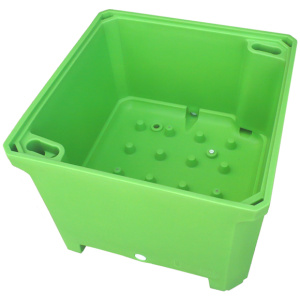
Rewatering Containers
Made from twin layers of rotationally moulded PE and PUR foam core, our rewatering/depurating containers are extremely durable with excellent iso-thermal properties for keeping the water cooler with less expense. As a result, you can rest assured that both your accountant and your live molluscs and crustaceans are happy.
With their ingenious in-built piping system, the bins can be stacked up, and the freshwater can cascade through the whole stack of containers, allowing quick and efficient washing and depurating of tonnes of product with fresh water quickly and easily.
These units are perfect for storing and depurating bi-valve molluscs and crustaceans. Shellfish that will benefit from our plastic rewatering bins include cockles, mussels, clams, oysters, winkles, scallops, langoustine, prawns, shrimps, velvet crabs, lobsters, spider crabs, brown crabs, etc.
The Process of Cleaning Shellfish
There are several steps involved in cleaning shellfish to ensure they’re safe for consumption, including the following:
- Selecting fresh shellfish – First and foremost, it’s important to choose shellfish that are alive and healthy without damaged or broken shells.
- Rinsing – Following this, the chosen shellfish need to be rinsed under cold running water to remove dirt, sand, or debris.
- Inspecting – After the initial rinse, the shellfish need to be examined for signs of damage, such as cracked shells or dead shellfish. Any unhealthy shellfish need to be discarded.
Once the initial cleaning process has taken place, the time comes to store the shellfish in industrial stackable containers.
The Process of Storing Shellfish
The storage process is equally important as the cleaning process to ensure that shellfish are safe for consumption, and this process is explored in further detail below:
- Rewatering – After the shellfish has been rinsed and inspected, it needs to be placed in a container filled with clean, cold saltwater or seawater. This water needs to have the same salinity as the natural habitat of the shellfish. It’s important to use heavy-duty stackable plastic storage containers, as the containers need to be large enough to accommodate the shellfish without overcrowding.
- Maintaining temperature – The stackable water storage containers should be kept at a temperature between 0°C and 4°C to maintain the freshness of the shellfish and prevent bacterial growth.
- Changing water – Periodically, the water in the stackable thermal food containers should be changed to keep it clean and oxygenated. This works to flush out any accumulated waste and ensure that the shellfish remains healthy.
Shop Rewatering Containers at INKA Pallets
INKA’s range of rewatering containers allows you to carry out the above processes to maintain the freshness of shellfish. Shop the collection below.
Showing all 3 results
-
-
 All Pallet Boxes
RW-640
895 x 1450 x 730mm
640 Litre
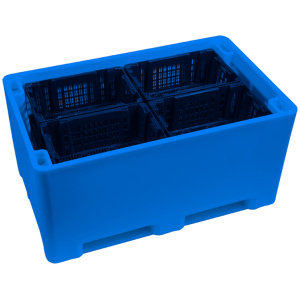
Stackable Re-Watering Container for Live Shellfish Storage
-