
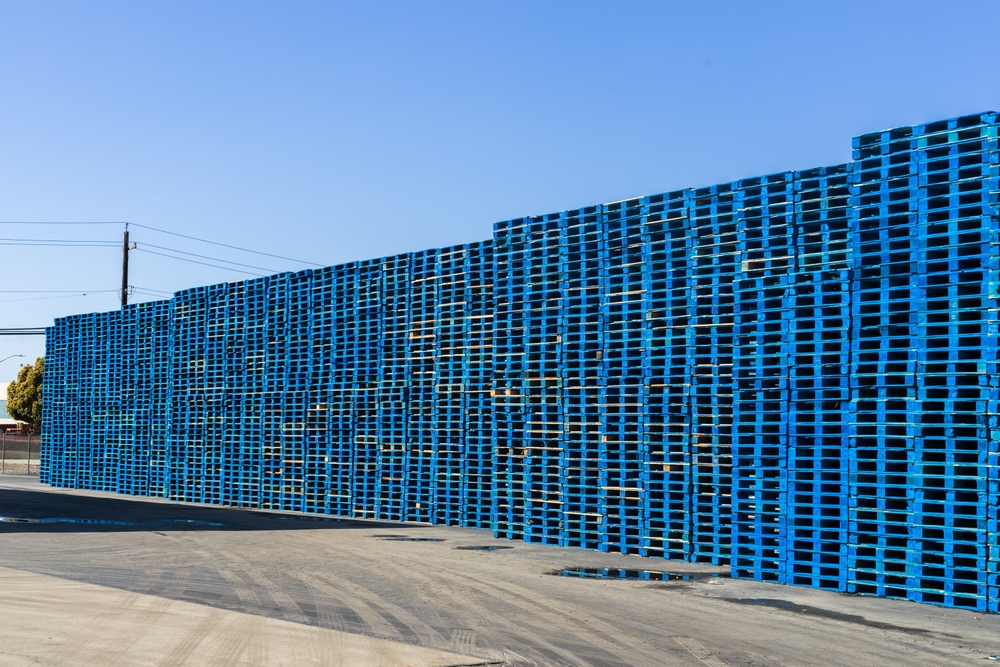
They might look simple, but the material a pallet is made from affects everything: How much weight it can carry, how long it lasts, whether it’s hygienic enough for food use and even how eco-friendly your supply chain is.
Choosing the right pallet material isn’t about aesthetics. It’s about critical factors like performance, safety and sustainability. Let’s break down the main types of pallets you’ll find today and how each one performs in real-world use.
1. Wooden Pallets – A Proven Classic
Wooden pallets are the old workhorses of the transport world. They’ve been used for decades and for good reasons – they’re strong, reliable and easy to repair.
If a board cracks, you can replace it without having to replace or repair the entire pallet. New parts don’t necessarily have to be an exact fit or like-for-like replacement. If a wooden pallet gets dirty, a quick scrub or a coat of treatment usually brings it back to life. They’re the go-to choice for countless industries because they strike a good balance between cost and durability.
What makes wooden pallets so popular:
- They’re sturdy and handle heavy loads well.
- Repairs are simple and affordable.
- They provide a good grip and loads don’t slide off easily.
However, wooden pallets do have a few drawbacks. Wood absorbs moisture, so it can develop mould or bacteria if not properly dried. That’s a problem in food or pharmaceutical supply chains, where hygiene is non-negotiable.
Plus, for export, wooden pallets must be heat-treated to meet ISPM-15 standards, which adds extra steps and cost. Still, they remain a reliable choice for most businesses.
Best for: local shipping, manufacturing, storage and general warehouse use.
2. Plastic Pallets – The Clean, Consistent Performer
Plastic pallets have steadily gained ground over the last decade and for good reason. They’re clean, long-lasting and uniform in shape. For companies that rely on automated systems or need spotless hygiene, they’re a dream.
At Inka Pallets UK, we’ve seen more and more businesses switch to plastic pallets because they tick so many boxes.
Why people love them:
- Super easy to clean with no risk of mould, dirt, or pests.
- Moisture and chemical resistant.
- The exact size and shape every time make it perfect for automation.
- Often made from recycled materials and are fully recyclable again.
Yes, plastic pallets cost more upfront. But they make up for it in lifespan and many last over a decade without breaking. You don’t need to replace or repair them constantly like wood.
Best for: clean industries, export, food and beverage and long-term reusable systems.
3. Presswood Pallets – Strong, Light and Eco-Friendly
Made by compressing recycled wood fibres under high heat, Presswood Pallets are lightweight, smooth and surprisingly strong. They can handle loads of up to 1250 kg, yet weigh far less than solid timber. That makes them perfect for export, where every kilo counts.
Here at Inka Pallets UK, we specialise in Presswood pallets and they’re becoming a favourite among companies looking for something that’s both practical and sustainable.
Why Presswood stands out:
- Made entirely from recycled wood waste.
- Naturally ISPM-15 compliant – no fumigation or heat treatment required.
- Safer to handle – no nails, splinters, or rough edges.
- Stackable and space-saving.
They’re best for one-way shipments or exports rather than heavy-duty reuse. But for many businesses, especially those focusing on sustainability, they’re a brilliant choice.
Best for: export shipments, eco-conscious businesses, lightweight to medium loads.
4. Composite Pallet Blocks – The Hidden Strength Beneath
You might not think much about the blocks under a pallet, but they’re doing all the heavy lifting. The type of block used can make or break a pallet’s lifespan.
EUROBLOCK composite pallet blocks, supplied across the UK and Ireland exclusively by Inka Pallets. They are made from recycled wood chips and resins. The result is a block that’s stronger, more consistent and more reliable than traditional timber blocks.
Here’s why they outperform traditional blocks:
- Perfectly uniform shape and size – every block is identical.
- Won’t rot or absorb moisture.
- Excellent nail retention.
- No heat treatment required and fully export-ready.
They’re also environmentally friendly, made entirely from recycled materials – an important factor as companies aim to lower their carbon footprints.
These blocks are now widely used across Europe’s Euro pallet material standards and are a favourite among pallet manufacturers, repairers and case makers who value precision and quality.
Best for: pallet manufacturing, repairs and export-compliant production.
5. Metal Pallets – For When Strength Matters Most
Metal pallets aren’t for everyone, but in certain industries, they’re unbeatable.
Made from steel or aluminium, they’re incredibly strong, fire-resistant and able to withstand extreme conditions. You’ll often find them in factories, military bases, or chemical plants where safety and strength are critical.
Why they’re used:
- Handle extremely heavy loads.
- Fireproof and chemical resistant.
- Long-lasting – often decades of use.
They’re not perfect – they’re heavy, expensive and can rust without proper coating. But in environments where durability matters more than price, metal pallets deliver.
Best for: heavy industry, defence and chemical manufacturing.
6. Paper Pallets – Light and Surprisingly Strong
Paper pallets might sound delicate, but they’re tougher than you think. Made from compressed cardboard or paperboard, they’re lightweight, affordable and surprisingly capable of handling medium-weight loads.
They’re especially popular for air freight, where weight equals money. Every kilogram saved means lower costs and smaller emissions.
Why paper pallets are worth a look:
- Extremely lightweight – often under 5 kg.
- Fully recyclable and biodegradable.
- Great for one-way or short-term shipments.
They’re not suitable for humid environments or heavy machinery, but for companies seeking a sustainable, disposable option, they’re ideal.
Best for: air freight, exports and lightweight goods.
A Quick Comparison
| Material | Strength | Durability | Hygiene | Eco-Friendliness | Best For |
| Wood | High | Medium | Low | Moderate | Local transport, manufacturing |
| Plastic | High | High | Excellent | High | Food, pharma, automation |
| Presswood | Medium | Medium | Good | Excellent | Export, eco use |
| Composite | High | High | Good | High | Manufacturing, repairs |
| Metal | Very High | Very High | Moderate | Medium | Heavy-duty industry |
| Paper | Low | Low | Good | Excellent | Air freight, light loads |
Euro Pallet Material – The Benchmark of Consistency
When people talk about Euro pallet material, they’re usually referring to the standardised materials and dimensions that define the European Pallet Association (EPAL) pallets. These Euro pallets measuring 1200 x 800 mm are used across Europe for their reliability and uniformity.
Traditionally, they’ve been made from high-quality timber. But newer versions now include plastic, Presswood and composite designs, offering cleaner and more sustainable options without compromising strength or compliance.
For businesses trading across borders, this consistency is essential. A Euro pallet made from plastic or composite materials performs just as reliably but with added hygiene and sustainability benefits.
Looking Ahead: The Future of Pallet Materials
Pallet materials are evolving quickly. As industries push for greener, smarter logistics, we’re seeing exciting changes:
- Sustainability first: More pallets are being made from recycled or renewable materials.
- Longer lifespans: Durable designs mean fewer replacements and less waste.
- Smarter tracking: Some pallets now include RFID chips for better visibility.
- Lightweight innovation: Presswood and paperboard pallets are reducing shipping emissions.
At Inka Pallets UK, innovation and sustainability go hand in hand. From plastic and Presswood pallets to EUROBLOCK composite pallet blocks, our goal is simple – to help businesses ship smarter, cleaner and more efficiently.
Final Thoughts
Choosing the right pallet isn’t just about logistics – it’s about running your business smarter. The material you pick can save money in the long run, keep your products safe and show customers that your company takes sustainability seriously.
Wood will always have that reliable, old-school strength. Plastic brings the hygiene and consistency modern operations need. Presswood offers a smart, sustainable middle ground. And metal? That’s your no-nonsense powerhouse for the toughest jobs.
Every type has its moment to shine – the key is knowing which one fits your needs best. So next time you’re loading up a shipment or planning your storage, take a second look at what’s sitting beneath those goods. Those pallets and the pallet materials they’re made from might not get much attention, but they quietly keep your whole operation moving.