
For anyone involved in logistics or transport, every kilogram matters. Whether you’re managing international exports or domestic deliveries, understanding weight is crucial for planning, efficiency and compliance. And that goes beyond the weight of the cargo or shipment – it includes the pallets the cargo sits on. For our customers, this means that the matter of ‘How much does a Euro pallet weigh?’ should be one they consider – or at least have the answer at their fingertips. Although the answer can vary slightly depending on the material and design, some standard measurements and benchmarks make it easier to plan shipments effectively.
In this article, we’ll look at the weight of a Euro pallet, the factors that affect it and why it plays such an important role in the supply chain.
What Is a Euro Pallet?
If we’re going to understand how much a Euro pallet weighs, we need to explore exactly what a Euro pallet is. The Euro pallet, also called an EUR or EPAL pallet, is a shipping pallet that complies with regulations intended to create a standard, interchangeable means of transporting goods throughout Europe. It was originally developed in Sweden and was adopted by European railways before becoming an international standard and a symbol of European integration.
A Euro pallet has dimensions of 1200mm x 800mm, making it slightly smaller than the ISO standard pallet usually found in the UK (1200mm x 1000mm). The Euro pallet was designed to fit efficiently into European-sized rail and road vehicles and the continent’s typically smaller commercial and industrial premises. Containers and racking systems have been developed to suit the Euro pallet, ensuring maximum benefit of the standard pallet size and weight.
The Average Weight of a Euro Pallet
And what is the weight of a Euro pallet? Euro pallets come in many variants within the basic specification, but a typical wood-slat Euro pallet weighs around 20kg, although this can vary depending on the exact material and condition of each pallet. This is the tare weight of the pallet – the weight of the pallet when empty. The tare weight plus the weight of the load and any packaging is what makes up the weight of the shipment as a whole – this is what shippers or handlers will base their charges on.
A brand-new pallet made from dry wood will be close to that 20kg standard. The wood often absorbs moisture with age, as the pallet is left out in the rain or gets spilt on. Older pallets will often be repaired by the addition of metal nails, screws and brackets. Together, these factors can increase the pallet weight by as much as 50 per cent – taking it up to 30kg. So, as a working figure for the average weight of a euro pallet, 25kg per wooden pallet would be a good starting point.
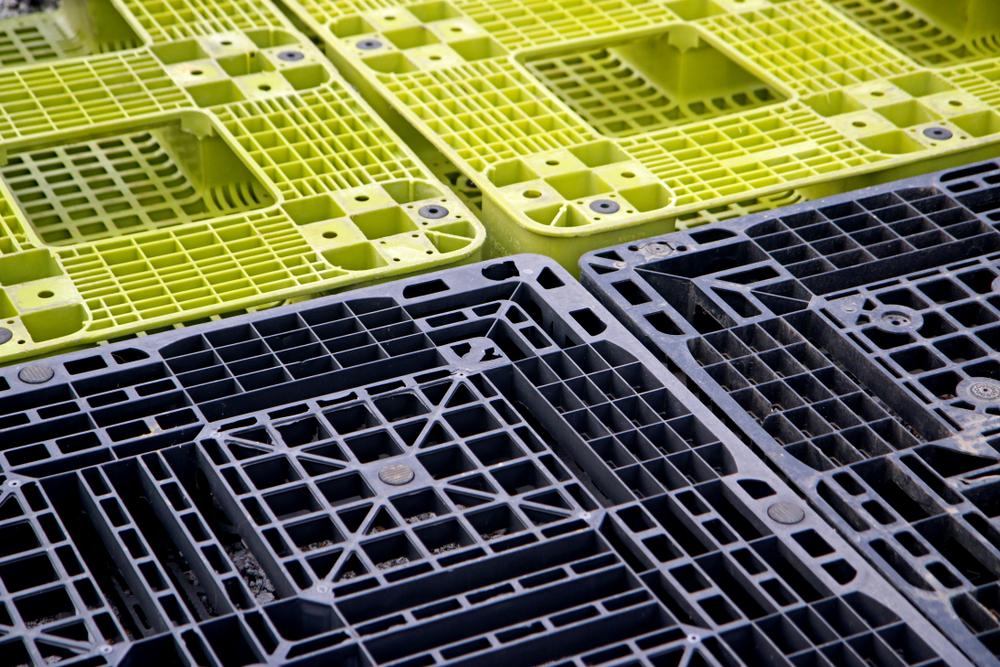
At INKA Pallets, our range of plastic Euro pallets can have weights lower or higher depending on their exact design. Lightweight nestable plastic models may weigh as little as 5kg or 10kg, whereas heavy-duty versions designed for racking or automated systems can reach 20kg or more.
A key advantage of plastic pallets is their more consistent weight – both between pallets and how pallets do not gain weight as they do not absorb moisture and do not need repairing with metal components.
Why Pallet Weight Matters
Understanding the average weight of a Euro pallet is more than just a technical detail, because it has a significant impact on logistics planning, cost efficiency and even safety. Let’s explore why pallet weight is such an important consideration in modern supply chains.
1) Accurate Load Planning
Every truck, shipping container, or aircraft has strict weight limits. Knowing the exact weight of a Euro pallet helps logistics teams calculate total load weights accurately and avoid overloading. Overweight shipments can lead to penalties, fuel inefficiency and safety risks. Equally, underutilising available weight capacity reduces cost efficiency.
For example, when shipping heavy goods such as machinery or packaged liquids, a difference of even just a few kilos per pallet can quickly add up across an entire truckload. Using pallets with a known, consistent weight allows for precise planning and optimal space utilisation.
2) Transport Efficiency
Reducing pallet weight can directly improve transport efficiency. A lighter pallet means more of your payload weight can be allocated to products rather than packaging. This is one reason many companies are now switching from wooden pallets to plastic alternatives, particularly for exports and international air freight.
Lightweight plastic Euro pallets can reduce the overall shipping weight of a load, saving on fuel and freight costs. Because they don’t absorb moisture like timber pallets, their weight remains stable, ensuring predictable load calculations every time.
3) Compliance and Safety
In regulated industries such as food production, pharmaceuticals and export logistics, compliance is essential. Certain carriers and countries have limits on total palletised weight and exceeding these limits can lead to delays or fines.
Moreover, knowing the average weight of a Euro pallet is important for warehouse safety. Pallets that are too heavy or inconsistently loaded can strain conveyor systems, forklifts, or warehouse shelving. Using pallets with uniform weights and known specifications helps maintain operational safety and prevents damage to equipment.
4) Sustainability and Environmental Impact
Pallet weight also plays a role in sustainability. Heavier loads require more fuel to transport, which increases carbon emissions. By optimising pallet choice – such as using lighter, reusable plastic Euro pallets – companies can reduce their environmental footprint.
At the same time, plastic pallets have a long service life and can be recycled at end-of-use, offering a more sustainable option compared to wooden pallets that may require frequent replacement.
How to Choose the Right Euro Pallet for Your Business
When selecting a pallet, consider how pallet weight interacts with your operations. If your priority is maximising payload and minimising transport costs, lightweight plastic Euro pallets may be the most efficient option. If your focus is on heavy-duty, static storage or reuse within a closed-loop system, a slightly heavier model may be more suitable.
INKA Pallets offers a wide range of Euro pallets designed to suit every application—from export and distribution to automated handling and hygienic storage. Our range includes lightweight nestable pallets, heavy-duty racking models and hygienic designs suitable for cleanroom environments.
Whatever your operational needs, INKA’s team can help you find the right pallet with the right weight and strength characteristics for your supply chain.
Why Euro Pallet Weight Should Never Be Overlooked
Knowing the weight of a Euro pallet may seem like a small detail or a piece of esoteric knowledge, but it’s a fundamental part of efficient logistics management. The average weight of a Euro pallet affects load capacity, transport costs, fuel efficiency and compliance with environmental standards.
By understanding and managing pallet weight, businesses can plan more accurately, ship more efficiently and reduce both operational costs and environmental impact.
At INKA Pallets, we provide a complete range of plastic Euro pallets that combine lightweight construction, strength and durability. Whether you’re shipping across Europe or managing warehouse logistics in the UK, our Euro pallets are built to perform reliably and consistently.
Contact INKA Pallets today to find out more about our range of Euro pallets and discover how the right pallet choice can help optimise your transport and logistics operations.